
Adding LED Underwater and Courtesy Lights to Your Boat: What to Consider
Updated Nov 25, 2026.
Few upgrades change a boat at night like good lighting: a soft glow off the transom at anchor, and steps guests can actually see. LEDs make underwater and courtesy lights easier to add. They also make it easy to get them wrong — the wrong spot, the wrong color, or the wrong wiring.
Here is what to think about before you buy or drill anything. Your boat manufacturer's instructions come first, along with the instructions for the light you choose. If something here does not match them, follow the manufacturer. If you would rather hand the job off, find marine electrical pros listed on The Boating Advisor, or call (844) 834-3388. Listings for pros are free.
This guide is general information. Always check with your boat, engine, or trailer manufacturer — and the light manufacturer — before you drill, wire, or add lighting to your boat.
Jump to the printable checklist
Underwater lights vs. courtesy lights
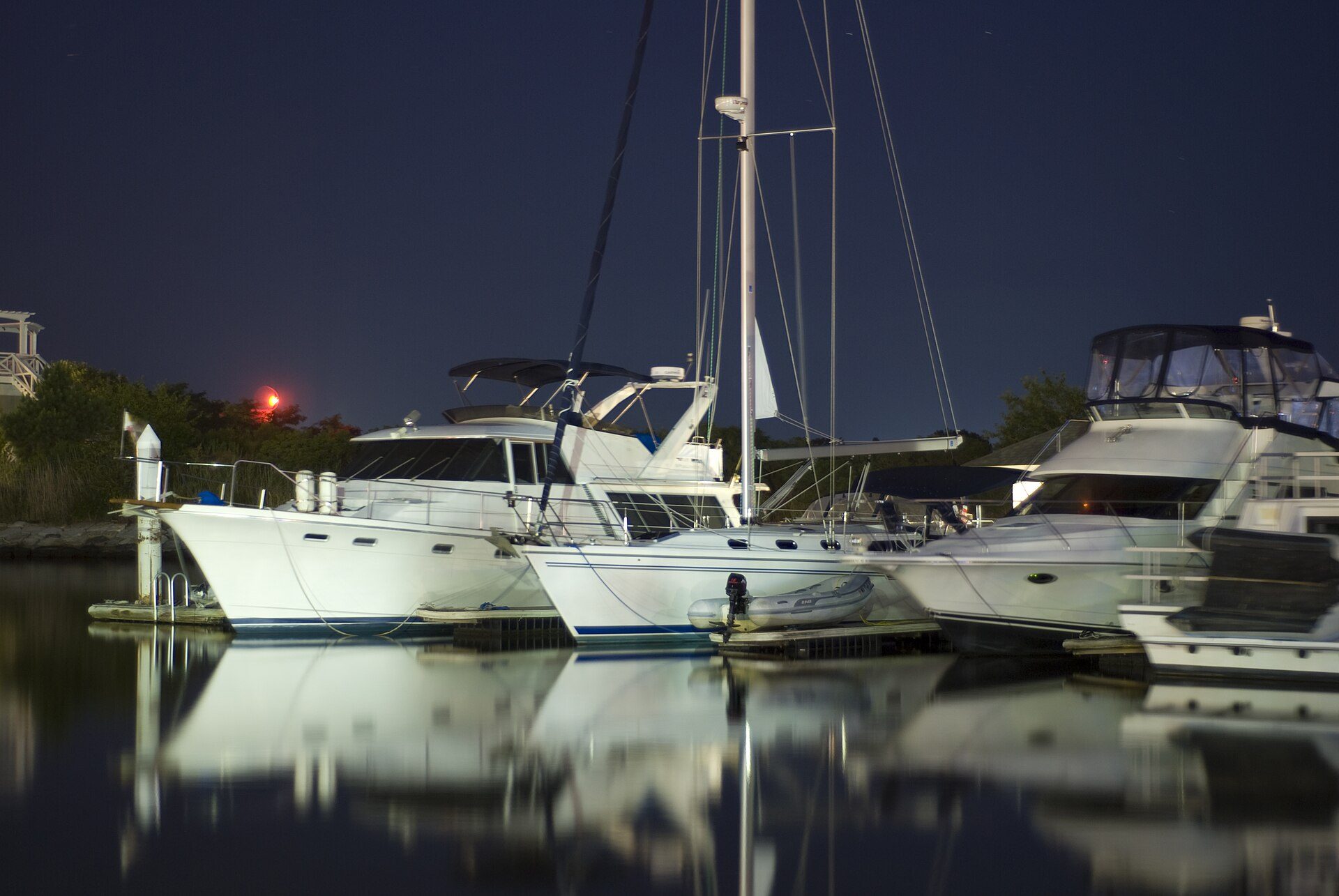
Underwater lights mount on the hull below the waterline, usually on the transom, and light the water around the boat. Power & Motoryacht notes they also help you spot floating lines or debris when backing into a slip at night, and anglers use them to draw bait.
Courtesy lights are small, low lights in the cockpit, on steps, and at boarding spots, so people can see where they step without losing their night vision.
One marine engine maker's guide says LEDs are now the industry standard for underwater lights, run cooler, last longer, and draw up to 80 percent less energy than halogen for the same brightness.
Types and mounting: surface mount vs. thru-hull
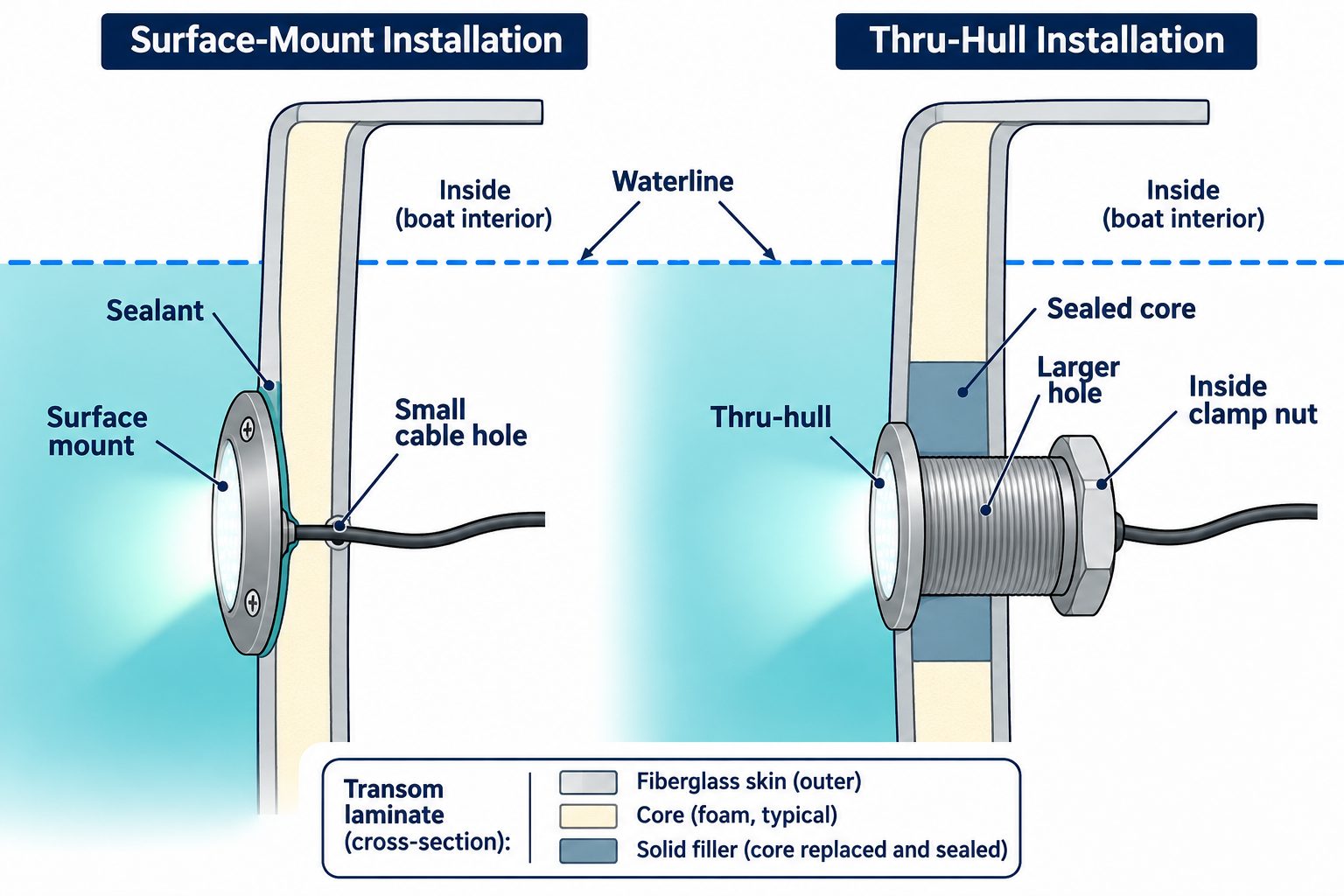
Surface-mount lights sit on the outside of the hull. Industry guides say they need only a small hole for the cable plus fastener holes. Most go on the transom (some only there, not on a running surface); some mount on trim tabs.
Thru-hull lights sit in a larger hole cut through the hull, with the housing secured from inside. That guide says they are typically the brightest, but they need a larger hole and often more complex wiring. They are common on larger boats.
Other options include "no-drill" lights that thread into an existing hole such as the drain plug, and portable lights hung over the side on a cord (Power & Motoryacht).
Things to think about before choosing:
- Location. Industry guidance advises mounting below the waterline where the light will not cause drag or turbulence as the boat comes onto plane. Check what is behind the spot before drilling.
- Cored transoms. Power & Motoryacht notes most transoms are cored, so every hole must be sealed. For larger thru-hull holes, it recommends digging out core around the hole and filling it with epoxy first.
- Read the manual first. Download the installation manual before you buy.
Wiring and fusing
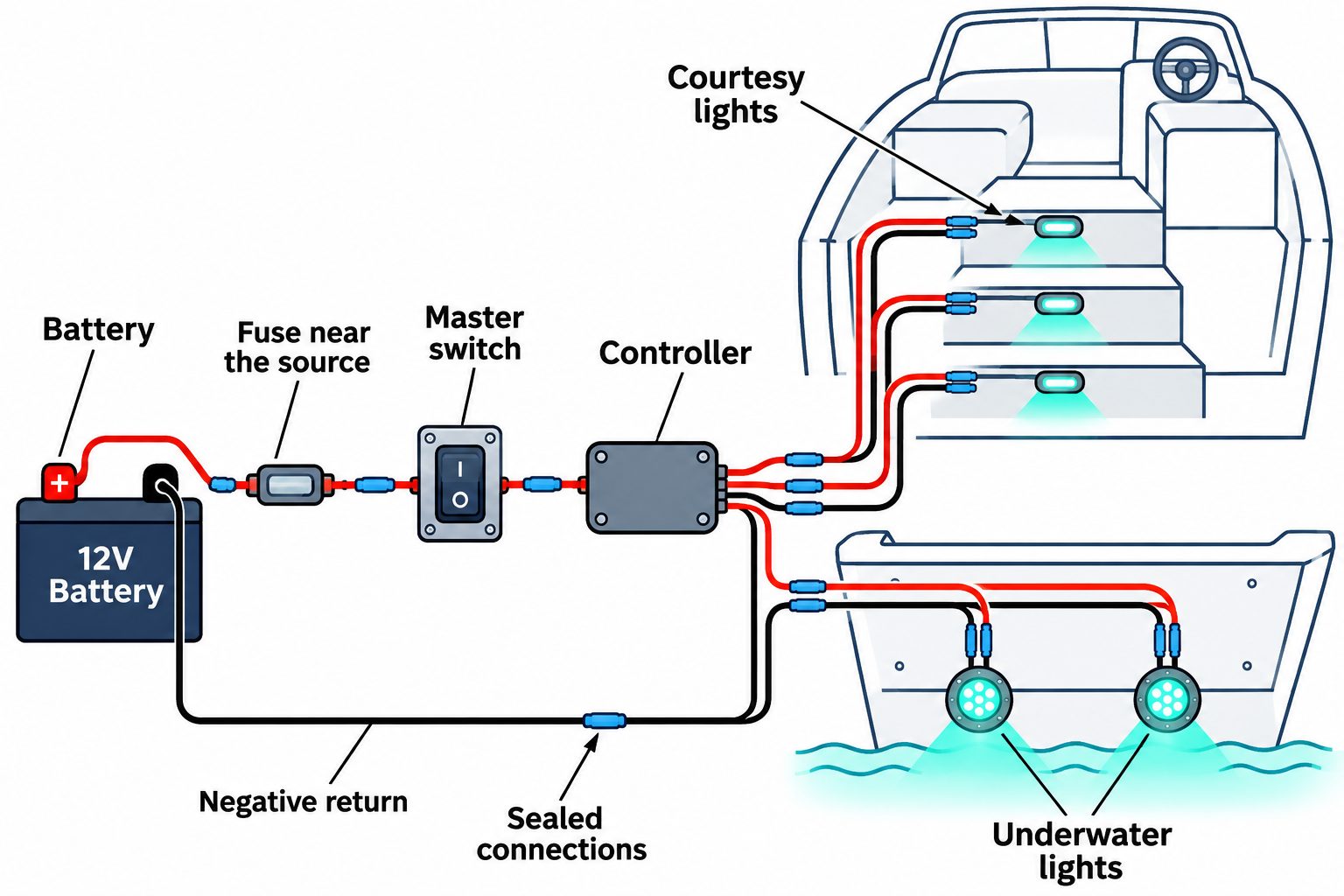
- Protect the circuit. The Coast Guard's electrical rule for boat builders (33 CFR 183.455) calls for a fuse or manually reset, trip-free circuit breaker at the power source, or within 7 inches of it, measured along the wire. If that is impractical, the wire may run up to 40 inches to the fuse if it is fully enclosed in a sheath or box. Use the fuse and wire size the light maker specifies.
- Add a master switch. The BoatUS Foundation suggests wiring decorative lights to a single switch so you can turn off every nonessential light before you get underway.
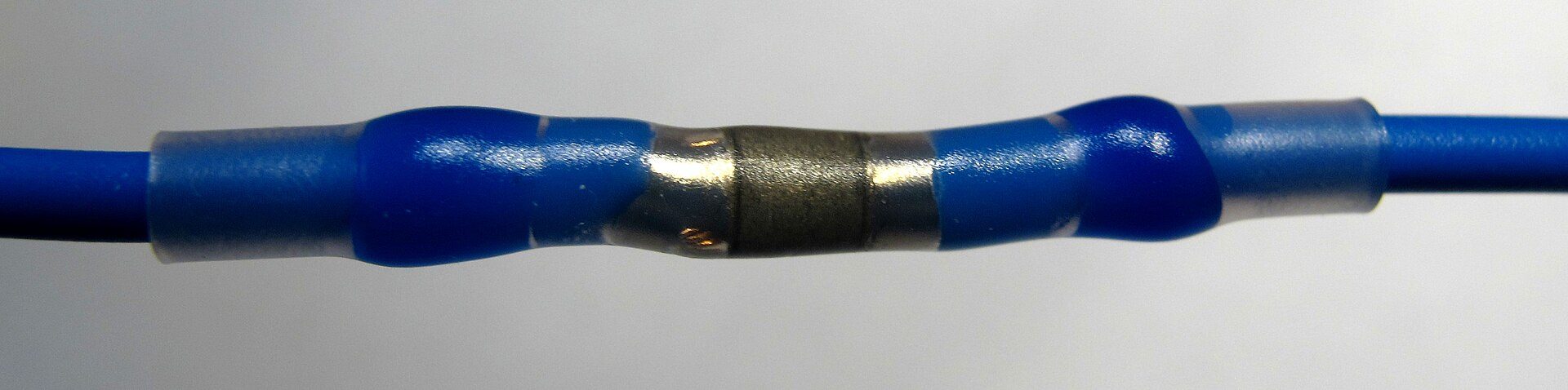
- Make sealed connections. Boating Magazine recommends heat-shrink crimp connectors to keep out corrosion, a pull test on every crimp, and tinned-copper terminals with nylon sleeves.
- Plan for controllers. Color-changing lights need a controller — more connections to keep dry.
Power draw
LEDs are efficient, but underwater lights often run at anchor with the engine off. Add up the rated current of every light and controller on the circuit (watts divided by system voltage gives amps). Then ask whether your batteries can run them as long as you plan and still start the engine. If you are not sure, ask a marine electrician.
Saltwater and corrosion
- Choose marine-grade housings. Industry guidance recommends housings made for the water you boat in that will not rust or corrode, and notes that marine underwater lights are typically rated IP67 or IP68 for prolonged submersion.
- Bond or isolate — follow the manufacturer. Some bronze lights are meant to connect to the bonding system; others are designed to stay isolated with matched fasteners. Power & Motoryacht reports an ABYC technical specialist recommended following the light maker's instructions, and suggests a galvanic corrosion check.
- Keep them clean. Industry guidance recommends cleaning lenses with a mild solution and soft cloth, checking for leaks and corroded connections, and removing surface-mount or no-drill lights for long winter storage.
Lighting rules: don't confuse other boaters
The federal rule. Navigation Rule 20(b) says that from sunset to sunrise, no other lights may be shown except lights that cannot be mistaken for required navigation lights, do not impair their visibility or distinctive character, and do not interfere with keeping a proper lookout. The Coast Guard has also issued a safety alert warning that LEDs, rope lighting, underwater lighting, and other decorative lighting may violate navigation light rules.
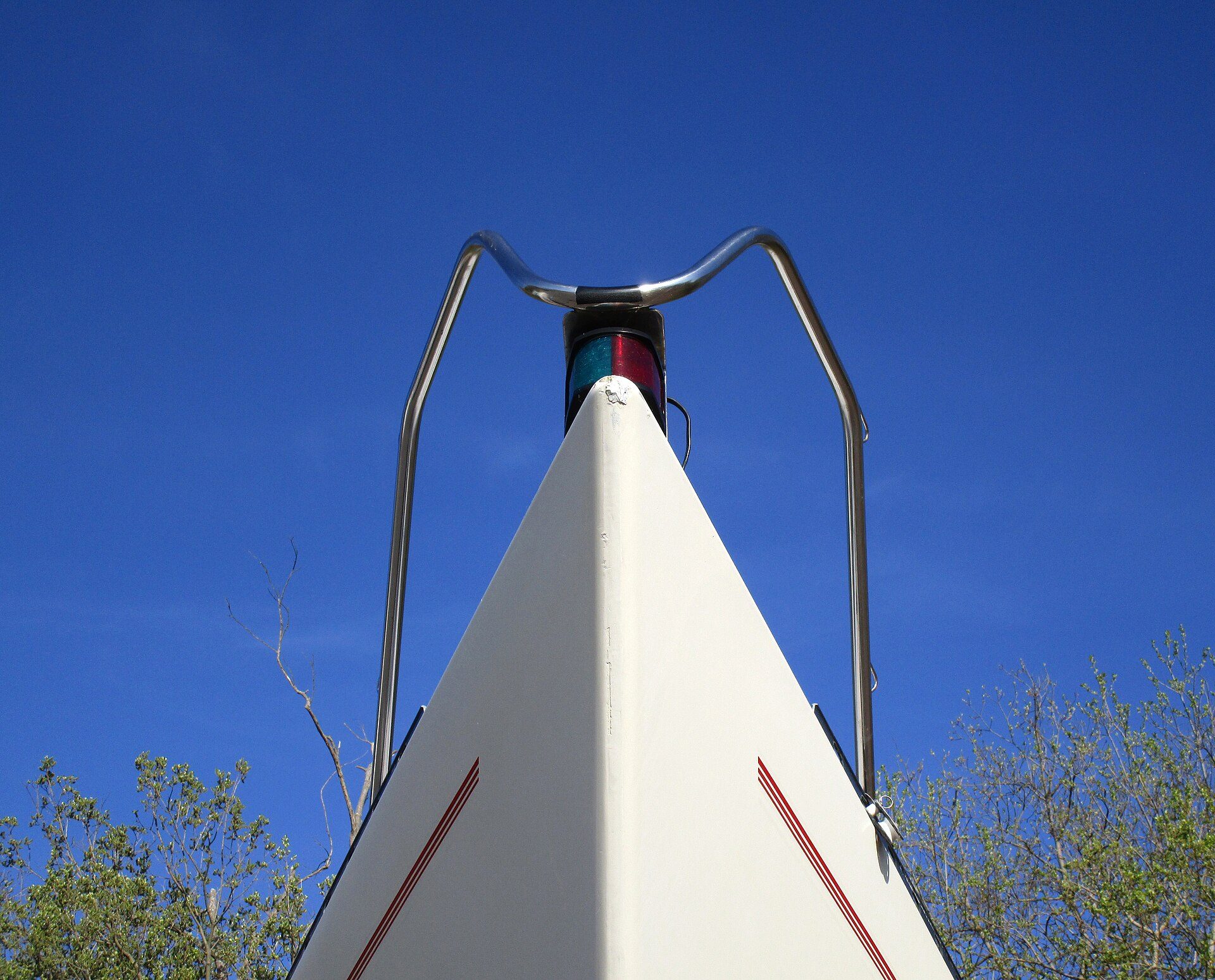
What the Coast Guard says about decorative lights. In its Navigation Rules FAQ, the Coast Guard discourages extra decorative, strobe, or high-intensity lighting: it can confuse others, hide your navigation lights, hurt your lookout, or be mistaken for law enforcement and public safety lights (flashing blue, red, or yellow). It suggests looking at your lighting from a distance and adjusting it, or not using it, if it could be mistaken.
Lights reserved for others. On inland waters, the Inland Rules allow law enforcement vessels to show a flashing blue light (33 CFR 88.05), and vessels doing public safety work to show an alternately flashing red and yellow light (33 CFR 88.07).
State laws go further. Industry guidance notes that blue underwater lights are illegal in some areas. A few examples:
- Florida (s. 843.081) makes it unlawful to use any flashing or rotating blue light on a nongovernment vessel, and the definition covers lights designed to display blue whether or not they are in use.
- North Carolina (G.S. 75A-17) prohibits the use of a blue light by any vessel other than a law enforcement vessel.
- Arizona (A.R.S. 5-333) says no watercraft may display a blue light of any size or type unless it is an authorized law enforcement or emergency watercraft.
- Illinois (625 ILCS 45/4-8) prohibits red or blue oscillating, rotating, or flashing lights except on authorized watercraft, and other colors of flashing lights unless the state allows them.
These are examples, not a full list. Check your own state's boating laws with your state boating agency before you choose a color. The BoatUS Foundation warns that at a distance, waves can make steady blue underwater lights look like a flashing police light.
Courtesy lights and the helm. The BoatUS Foundation says misplaced decorative lights can make others misread your navigation lights, and helm glare hurts night vision. Keep courtesy lights low, aimed down, and out of the driver's eyes.
A simple habit: enjoy color and effects at the dock or at anchor, follow the anchor-light rules, and switch decorative lights off before you get underway.
Printable LED lighting checklist
Print this page and check items off as you go. Skip anything that does not apply to your boat.
- Check with your boat, engine, or trailer manufacturer, and read the light manufacturer's installation manual
- Check your state's boating laws on light colors (especially blue) and flashing lights
- Decide what you want: underwater lights, courtesy lights, or both
- Choose a mount: surface mount, thru-hull, trim-tab, no-drill, or portable
- Pick a location below the waterline that won't cause drag, and check what's behind it
- Seal every hole; protect cored transoms from water
- Choose marine-grade housings rated for submersion
- Follow the manufacturer on bonding or isolating the light
- Fuse the circuit at the source, using the specified fuse and wire size
- Use sealed heat-shrink connections and tinned terminals
- Wire decorative lights to one master switch
- Add up the current draw and check your battery can handle it
- Keep courtesy lights low and out of the operator's eyes
- Look at your lights from a distance at night; make sure they can't be mistaken for navigation or law enforcement lights
- Turn decorative lights off before getting underway
- Clean lenses and check for leaks and corrosion during the season
- Remove surface-mount or no-drill lights for long winter storage if the manufacturer recommends it
This guide is general information. Always check with your boat, engine, or trailer manufacturer — and the light manufacturer — before you drill, wire, or add lighting to your boat. It is not a substitute for their instructions or legal advice. Lighting laws vary by state and waterway; check with your state boating agency. The Boating Advisor does not endorse specific product brands.
Sources
- USCG Navigation Rules, Rule 20(b) — 33 CFR 83.20
- USCG Navigation Center, Navigation Rules FAQ ("Can I use decorative lights, strobes, or other high intensity or specialty lights...?")
- USCG Inland Rules Annex V, 33 CFR 88.05 (law enforcement flashing blue) and 88.07 (public safety red/yellow)
- USCG boat-builder electrical rule on overcurrent protection, 33 CFR 183.455
- USCG Boating Safety, "Marine Safety Alert issued for Navigational Lights"
- BoatUS Foundation, "Don't Make Your Boat Look Like a Christmas Tree" (via Pontoon & Deck Boat, Dec 2023)
- Florida Statutes s. 843.081
- North Carolina G.S. 75A-17(c)
- Arizona Revised Statutes 5-333(F)
- Illinois 625 ILCS 45/4-8
- Mercury Marine Dockline, "Upfitting Your Boat with Under Water Lights"
- Power & Motoryacht, "Underwater Lighting Solutions" (2016)
- Boating Magazine, "How to Make Marine Electrical Connections"
Next step
Related guides
Get boating tips and launch news
One short email when there's something useful. Unsubscribe anytime.
We'll only use your email for these updates. We never sell it.