
Shrink Wrap vs. Boat Cover: How to Choose Winter Protection for Your Boat
Updated Nov 24, 2026. Featured shrink wrap and canvas shops in a shared pro/vendor call-out; sections on supporting the cover and keeping moisture down; original illustrations including a support-and-moisture diagram.
When the season winds down, every boat that sits outside needs something over it. For most boaters the choice comes down to two options: shrink wrap, which is installed fresh each season, or a reusable boat cover that you put on and take off yourself. Both can work well. The right one depends on where you live, where the boat will sit, how often you want to get aboard, and how much upkeep you are willing to do.
This is general advice for regular boaters. Your boat manufacturer's care and storage instructions come first. If something here does not match them, follow the manufacturer. If you would rather hand the job off, find shrink wrap and winterization pros listed on The Boating Advisor, or call (844) 834-3388. Listings for pros are free.
This guide is general information. Always check with your boat, engine, or trailer manufacturer — and your marina or storage yard — before you cover and store your boat.
Jump to the printable checklist
What each option does
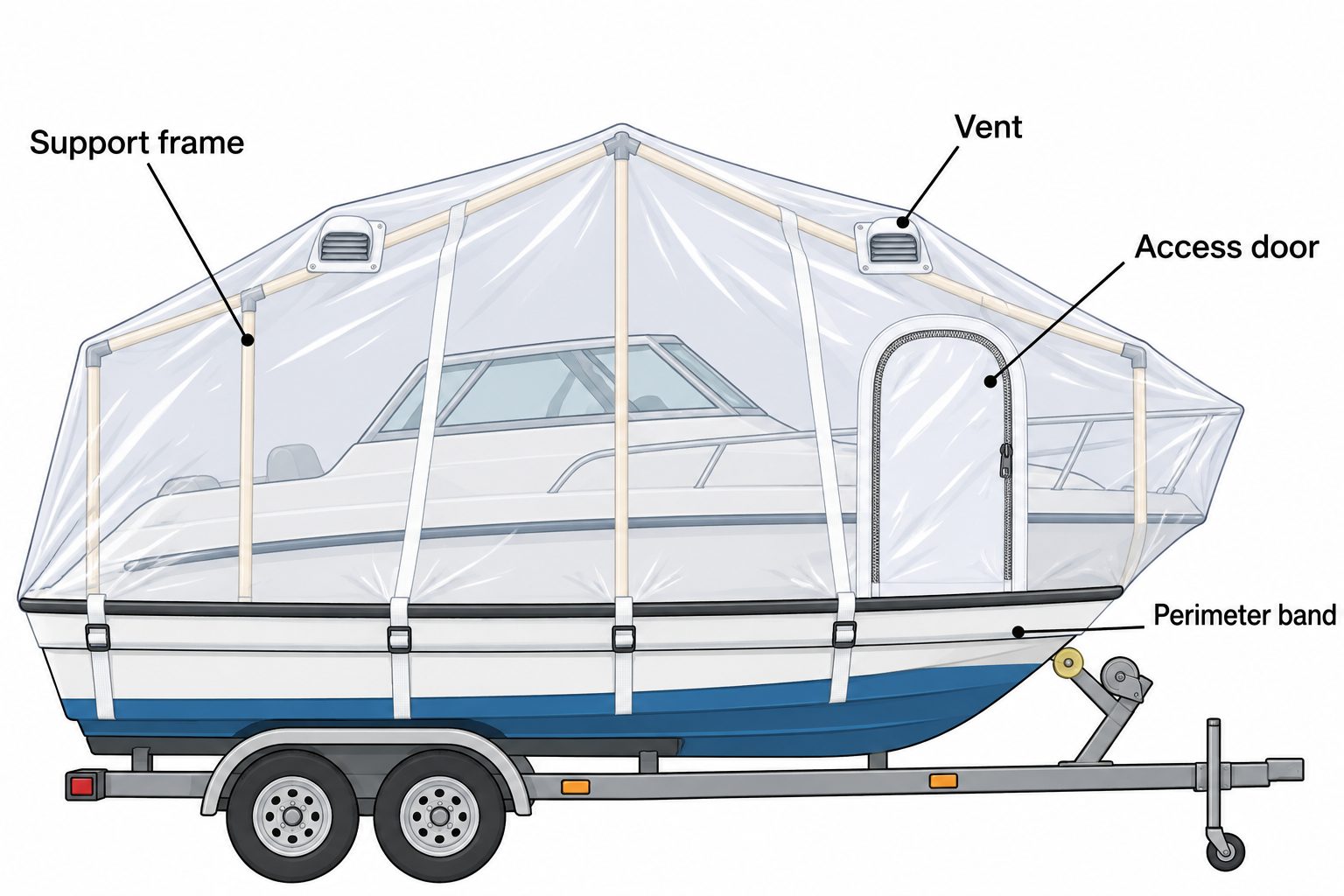
Shrink wrap is a polyethylene film draped over a support frame, strapped down, and heated so it shrinks tight around the boat. It is a single-season cover. In spring it is cut off and, ideally, recycled.
A reusable boat cover is a fabric cover — generic, semi-custom, or custom-fitted — held in place with straps or a drawstring and, for winter use, supported by poles or a frame. A good cover can last several seasons.
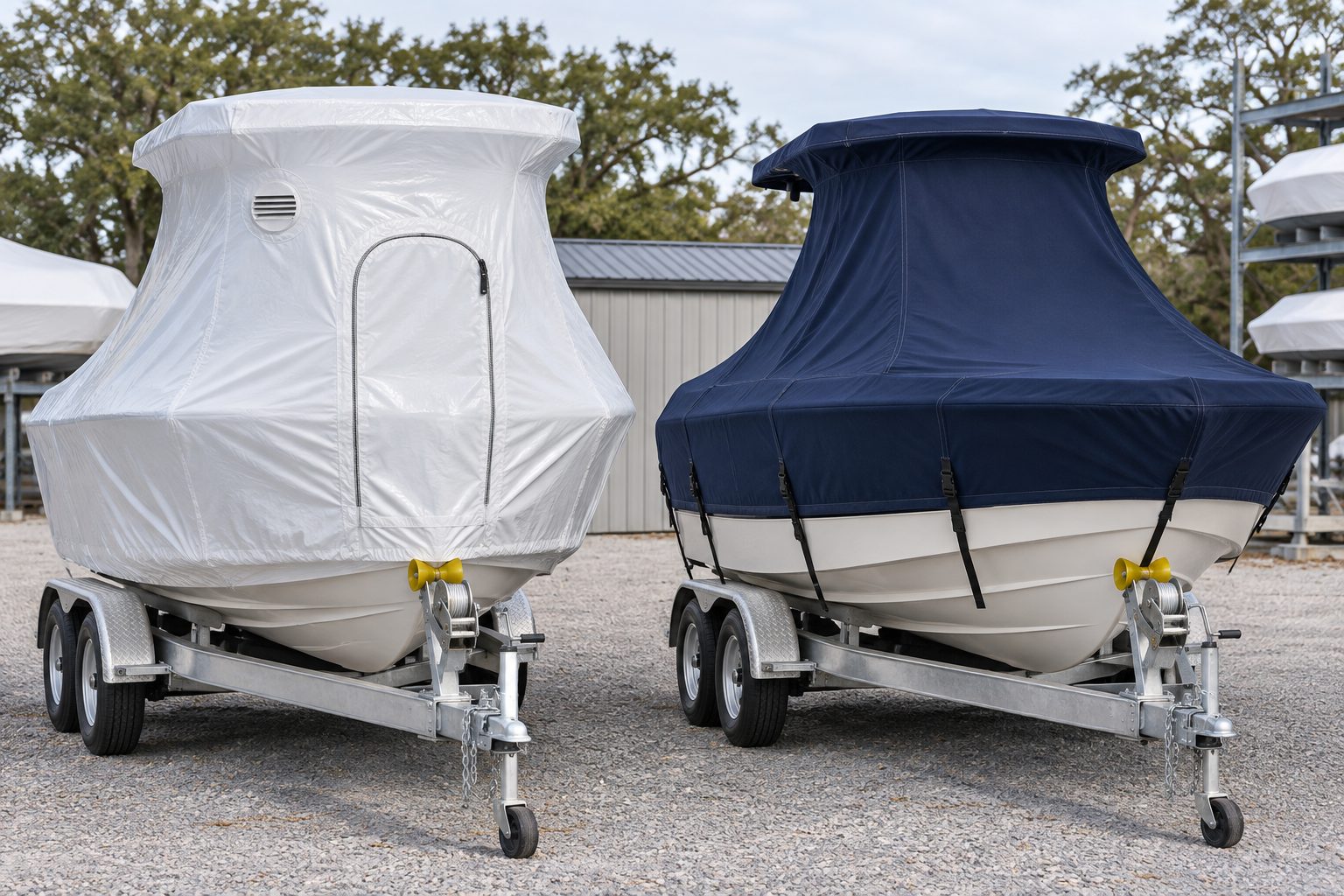
When the BoatUS Foundation surveyed about 350 of its members, most said shrink wrap was their go-to option. Around 90% of the shrink-wrappers said they believe it protects their boats well, and about half liked the convenience of having someone else install and remove it. But 12% said they used shrink wrap because they did not know there were other options. There are.
Shrink wrap: pros and cons
Why boaters choose it
- Tight, weather-shedding fit. BoatUS calls shrink wrap very effective at keeping rain and snow out, and a well-built frame sheds snow.
- Little upkeep once it is on. A professional installs it and removes it, and it does not need re-tightening the way straps do.
- Some yards require it. BoatUS notes that some yards require shrink wrap for boats in rack storage, because water pooled on a sagging fabric cover adds weight.
What to watch for
- It does not breathe. BoatUS warns that shrink wrap traps moisture and can create serious mildew problems unless vents are installed along the cover. One shrink wrap vent chart suggests about 3 vents for boats under 18 feet, 4 for 19 to 24 feet, and 6 for 25 to 32 feet, with more on larger boats. See Keeping moisture down under the cover.
- It is single-use plastic. Shrink wrap is recyclable when it is clean and free of straps, zippers, doors, and vents, but only if there is a program near you. Ask your yard or installer.
- Access is limited. You can add a zippered access door, but getting aboard mid-winter is harder than lifting a cover.
- It is a pro job. BoatUS recommends leaving shrink-wrapping to professionals. The film is shrunk with a heat gun, and a moment of inattention can start a fire — sometimes inside the cover, where it may not be visible right away.
Reusable covers: pros and cons
Why boaters choose them
- You reuse them. The Maryland Clean Marina Program notes that a semi-custom cover can cost about the same as two or three years of shrink-wrapping, and it keeps single-use plastic out of the waste stream.
- Easy access. Pull back a corner to check the bilge, charge the battery, or work on a winter project.
- They breathe. Many fabric covers are breathable, and many include vents.
What to watch for
- They need support. In its winter test, the BoatUS Foundation found most covers had to be bailed out after rain or snow. Poles or a frame give the cover a slope so water and snow run off. See Supporting the cover so water and snow run off.
- They need checking. BoatUS recommends checking a covered boat at least once a month and after heavy rain or snow. Pooled water can damage the boat, trailer, or lift, or rip the cover.
- Waterproof is not the same as water resistant. BoatUS suggests choosing waterproof fabric for a storage cover.
- Wear points show up. Sharp corners, windshields, and rails chafe through fabric as the cover settles. Pad them.
Where the boat will sit matters as much as the cover
- Indoor storage. A boat stored inside a building may only need a light dust cover. Ask the facility what they allow.
- Dry stack or rack storage. Follow the marina's rules. Some require shrink wrap; some handle covering for you.
- Outdoors on a trailer or stands. This is where the cover matters most. BoatUS suggests that whatever you choose should be strong, breathable, water-resistant, ventilated, and supported by a sturdy frame, so it sheds snow and does not flap and chafe the hull in the wind.
- On a lift or in the water. Covers need to shed water well. Check the boat often, especially after storms.
Never tie the cover to jack stands or support blocks. BoatUS warns the stands can be pulled out in a strong wind.
Supporting the cover so water and snow run off
A cover that sags will pond rain and snow. In its winter test, the BoatUS Foundation found most covers had to be bailed out after rain or snow, and that the supports that came with many covers were not robust enough. Poles or a frame are not optional for outdoor storage. They give the cover a roof-like pitch so water and snow run off, and they keep the fabric from sitting on sharp edges.
This matters most for reusable covers. Shrink wrap is also built over a support frame; a professional installer typically handles that. The same ideas apply if you are checking a shrink-wrapped boat: the cover should stay peaked, not sagging.
- Use a sturdy frame or poles, and give the cover a peak. BoatUS recommends a sturdy framework — wood or aluminum for many custom covers — so the cover can circulate air and shed snow and ice. A single pole is often not enough. In the Foundation test, staff had to add poles to tent the fabric in the stern in almost every case. Choose a substantial pole with a wide base and a wide top. Pad both ends: carpet squares or similar padding help spread the load so the pole does not punch through the cover or mark the deck. A bit of nonskid under the base helps keep it from sliding.
- Keep the cover from hanging on sharp edges. As a cover settles, windshield corners, rails, fittings, and other wear points cut into the fabric. Pad them liberally — foam noodles, old towels, or sponges all work. Don't forget the edges of the windscreen.
- Pitch the cover so water drains. Pull out low spots as you install the cover, and add support wherever the fabric would otherwise sag. Water that sits in a dip loads the straps, can rip the cover, and can overload a trailer or lift.
- Strap it under the hull or to the trailer — never to jack stands. Straps should run under the hull, or to a solid point on the trailer, so the cover stays tight in the wind. BoatUS warns you should never tie a cover to jack stands or support blocks; the tension can pull the stands out from under the boat. If the boat is on stands, make sure the straps are long enough to meet under the hull without using the stands as an anchor.
- Check tension through the season. Fabric stretches, and weather loads the cover. BoatUS recommends checking at least once a month and after heavy rain or snow. Retension straps, reset any pole that has shifted, and bail pooled water right away. A cover that looked tight in October may be slack or overloaded later in the season.
Keeping moisture down under the cover
Water trapped under a cover — or moisture the boat itself gives off — leads to mildew, damp cushions, and corrosion. Ventilation is the first defense. Drying the boat before you cover it, leaving interior spaces open so air can move, and, if you want extra help, using a moisture absorber all work together. A desiccant alone will not fix a boat that was covered wet or a cover with no vents.
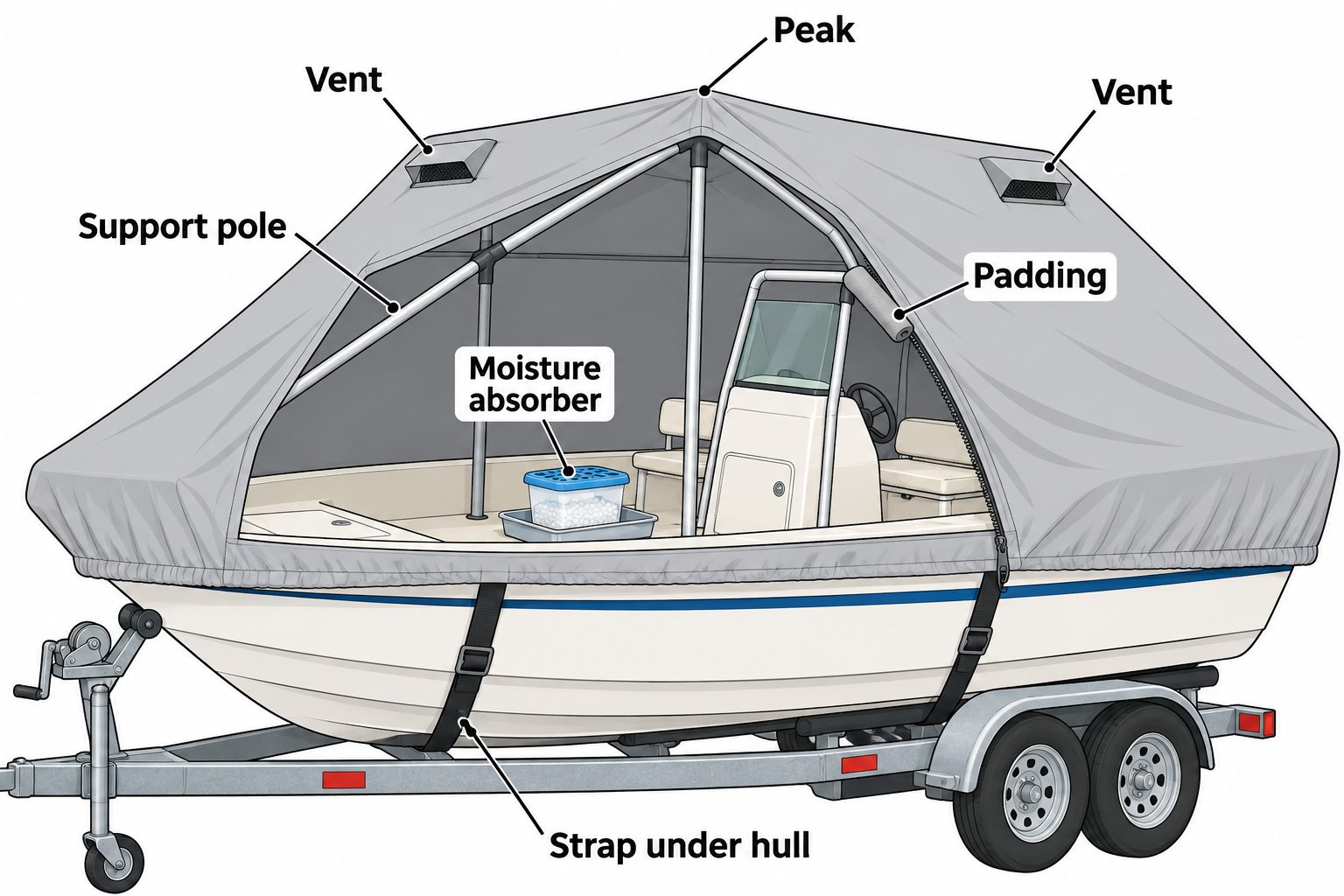
- Ventilate the cover. BoatUS warns that shrink wrap traps moisture and can create serious mildew problems unless vents are installed along the length of the cover. One shrink wrap vent chart suggests about 3 vents for boats under 18 feet, 4 for 19 to 24 feet, and 6 for 25 to 32 feet, with more on larger boats. Place them so air can move, not bunched in one spot. Reusable covers need to breathe too: the BoatUS Foundation notes that a tight cover should include vents. If yours does not, add them or ask a canvas shop. If the boat has two-part polyurethane paint, shrink wrap that touches it can cause peeling or bubbling; BoatUS suggests foam pads between the wrap and the hull, which also helps condensation escape.
- Dry the boat before you cover it. Wash off salt and dirt, sponge out the bilge, and let the hull, cockpit, and cabin dry. A wet boat under a tight cover is a mildew problem waiting to start.
- Leave the interior open to the air. Open lockers, cabinets, and storage lids, and take out wet gear, life jackets, and other fabric that holds dampness. If the cover will keep rain and snow off the deck, leaving cabin doors or a hatch slightly cracked under the cover can help air move through the interior. Do not leave an opening that lets weather in. If you need the boat locked for security, keep it secured and rely on vents — and a moisture absorber, if you use one.
- Use a moisture absorber if you want extra protection. Common, generic options include calcium-chloride tubs or hanging bags, and reusable silica-gel desiccant packs or canisters. Calcium chloride pulls moisture out of the air and turns it into a liquid that must be caught in the container or a drip tray; that liquid can corrode metal and stain fabrics, so keep the unit upright and level, on a stable surface, away from children and pets, and not where a spill would reach the engine, electrical gear, or upholstery. Check it and empty or replace it when the reservoir is full. Silica-gel desiccants typically hold less moisture but can be dried out and used again; follow the product instructions for recharging, and do not heat a pack that may have picked up fuel or other chemical vapors. These products help; they do not replace ventilation or a dry boat.
- Treat canvas and vinyl if you choose to. After the cover and the boat's canvas or vinyl are clean and dry, some boaters apply a mildew-preventive treatment made for marine fabric or vinyl. Follow the product and fabric-maker instructions, and test on a hidden area first.
- A solar vent fan is an option. A solar-powered vent can help move air through a cabin or, in some setups, through a shrink-wrap or fabric cover. It works best when there is a second opening so air can enter as well as leave. Follow the product's installation instructions, and don't cut a new hole in a deck or hatch unless you are prepared to keep that fitting watertight later.
- Check periodically. On the same monthly visits — and after heavy weather — look at vents, absorbers, and the inside of the boat if you can get aboard. Empty or recharge absorbers, clear a blocked vent, and air the boat on a dry day when you are there.
- In Florida and other humid climates, this matters even more. Warm, moist air is hard on a closed-up boat, even when there is no snow to shed. Check vents and moisture absorbers more often, and air the cover and the cabin when you can. See also the Florida notes below.
Florida and warm-climate boaters
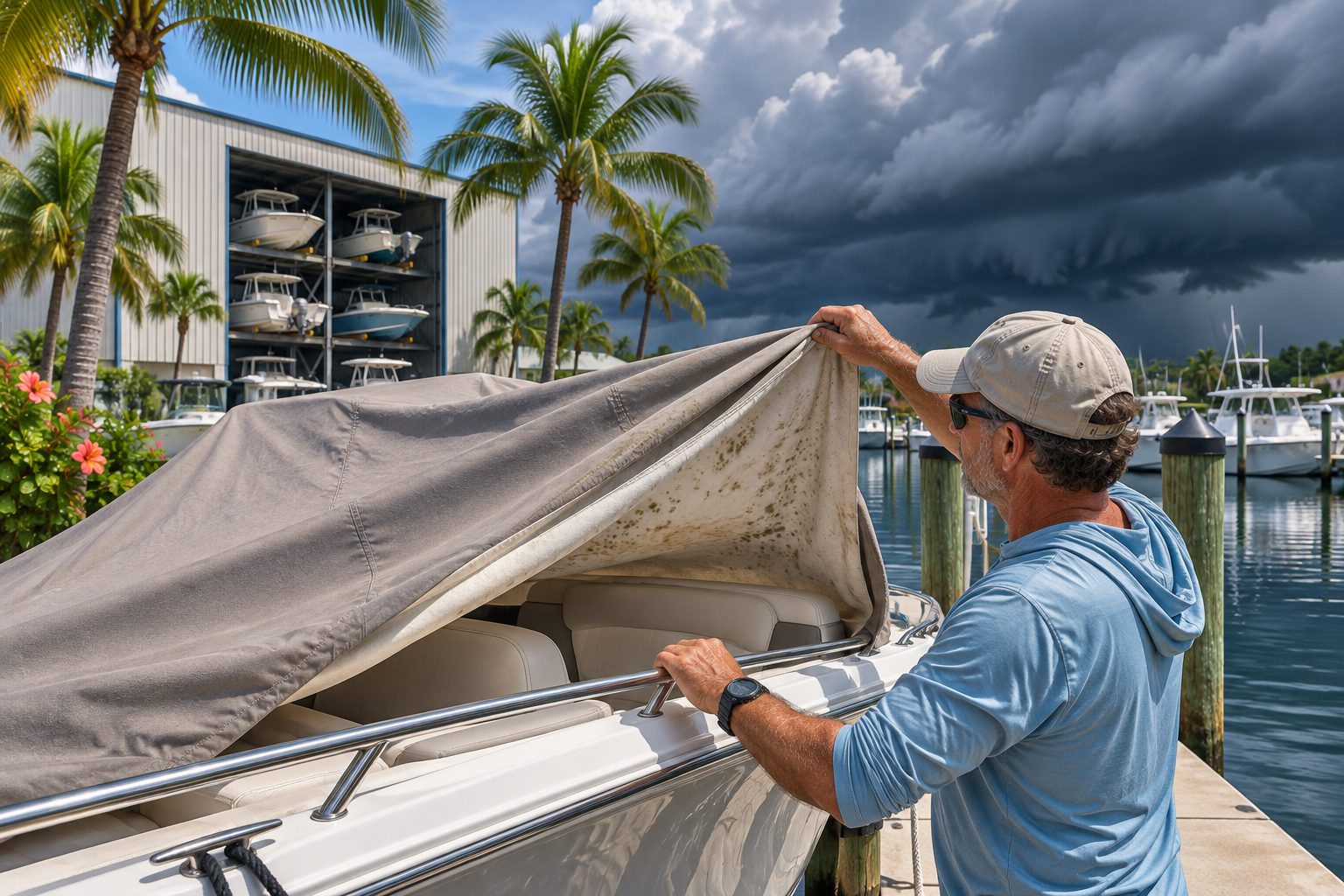
Many Florida boaters never shrink wrap. There is no snow load to shed, many boats are used year-round, and the bigger threats are sun, salt, rain, and humidity. For a boat that is used often, a well-fitted cover that comes off in a minute usually makes more sense than wrap that has to be cut off.
Humidity also makes moisture control under the cover more important. See Keeping moisture down under the cover for vents, absorbers, and ventilation, and check them more often in a warm, humid climate.
A few warm-climate tips:
- Breathability matters more. In humid climates mildew is often the main storage problem. One Southwest Florida storage pro says a common mistake is using cover fabric that does not breathe well enough for the climate. Ask a canvas shop which materials hold up to strong sun and humidity.
- Think about UV. Strong sun breaks down fabric, stitching, and vinyl over time. Rinse salt off and let the boat and cover dry before covering.
- Plan for storms. Before a hurricane, BoatUS advises removing canvas covers and biminis to cut windage, and following your hurricane plan for the boat and trailer.
- Storage is a real option. Dry stack and covered storage keep the boat out of the sun and rain altogether.
How to choose
Ask yourself:
- Will the boat see snow or a hard freeze? Shrink wrap or a well-supported, waterproof cover is the safer bet.
- Will you use the boat or work on it over the off-season? A reusable cover is much easier to get under.
- What does your yard or marina require? Check your storage contract first.
- How often can you check on it? A cover needs monthly visits and checks after storms. Professionally installed wrap needs less attention, but still check it.
- How long will you own the boat? A good cover is reused for several seasons. Wrap is bought every year.
Printable winter cover checklist
Print this page and check items off as you go. Skip anything that does not apply to your boat or storage.
- Check your boat manufacturer's storage instructions and your marina or yard rules
- Decide: shrink wrap, reusable cover, or indoor/dry stack storage
- Finish winterizing or lay-up steps before the boat is covered
- Clean the boat, sponge out the bilge, and let everything dry completely before covering
- Open lockers, cabinets, and storage lids, and remove wet gear so air can move
- If the cover keeps weather off the deck, consider leaving a cabin door or hatch slightly cracked under it; do not leave an opening that lets rain or snow in
- Shrink wrap: use a pro, and make sure vents are installed along the length of the cover
- Shrink wrap: ask for a zippered access door if you need to get aboard
- Cover: choose waterproof fabric that breathes and fits your boat
- Cover: install a sturdy frame or support poles with a peak so water and snow run off
- Use a pole with a wide base and top; pad both ends, and put nonskid under the base
- Pad sharp corners, windshields, rails, and other contact points to prevent chafe
- Run straps under the hull or to the trailer — never to jack stands or support blocks
- Add or confirm vents on a reusable cover if it fits tightly
- Optional: place a moisture absorber (a calcium-chloride tub or bag with a drip tray, or reusable silica-gel desiccant) in the cabin, away from children, pets, and anything a spill could damage
- Optional: apply a mildew-preventive treatment made for marine canvas or vinyl, following the product directions
- Optional: a solar vent fan, with a second opening so air can enter as well as leave
- Check the boat at least monthly and after heavy rain, snow, or wind; retension straps and reset poles if they have shifted
- Remove any pooled water right away; empty or recharge moisture absorbers and clear blocked vents
- Warm or humid climate: check vents, absorbers, and the cover more often; watch for mildew; remove covers and biminis before a hurricane
- In spring, remove shrink wrap cleanly and recycle it if a program is available
- Check with your boat, engine, or trailer manufacturer for storage and cover recommendations
This guide is general information. Always check with your boat, engine, or trailer manufacturer — and your marina or storage yard — before you cover and store your boat. It is not a substitute for their instructions. Storage needs vary by boat, climate, and location. The Boating Advisor does not endorse specific product brands.
Sources
- BoatUS Foundation, "Boat Covers for Winter Storage" (Foundation Findings #60, Sept 2022)
- BoatUS, "The Boater's Guide to Winterizing"
- BoatUS, "Winter Boat Storage Options" (Oct 2026)
- Maryland DNR Clean Marina, "Minimizing the Environmental Impact of Single Use Shrinkwrap"
- Shrink wrap vent chart (vents by boat length)
- Go Boating Florida, "Pro Tips: Storing Your Boat in SWFL"
- BoatUS hurricane preparation guide (remove canvas covers to cut windage)
- Practical Sailor, "High and Dry for Winter Storage" (desiccants and ventilation)
Next step
Related guides
Get boating tips and launch news
One short email when there's something useful. Unsubscribe anytime.
We'll only use your email for these updates. We never sell it.