
How to Winterize an Inboard or Sterndrive Engine
Updated Nov 26, 2026.
An inboard or sterndrive engine holds water in its block, manifolds, and cooling passages. If that water freezes, it can crack the block or a manifold. BoatUS says that in ten years of freeze claims, more than three-quarters happened because water was left in the engine or cooling system during a hard freeze.
This is general advice for regular boaters. Your engine manual is the final word. Drain points, antifreeze type, and fogging methods differ from engine to engine. If you would rather hand the job off, find inboard and sterndrive pros listed on The Boating Advisor, or call (844) 834-3388. Listings for pros are free.
This guide is general information. Always check with your boat, engine, or trailer manufacturer, and follow your engine manual's storage procedure, before you start.
Jump to the printable checklist
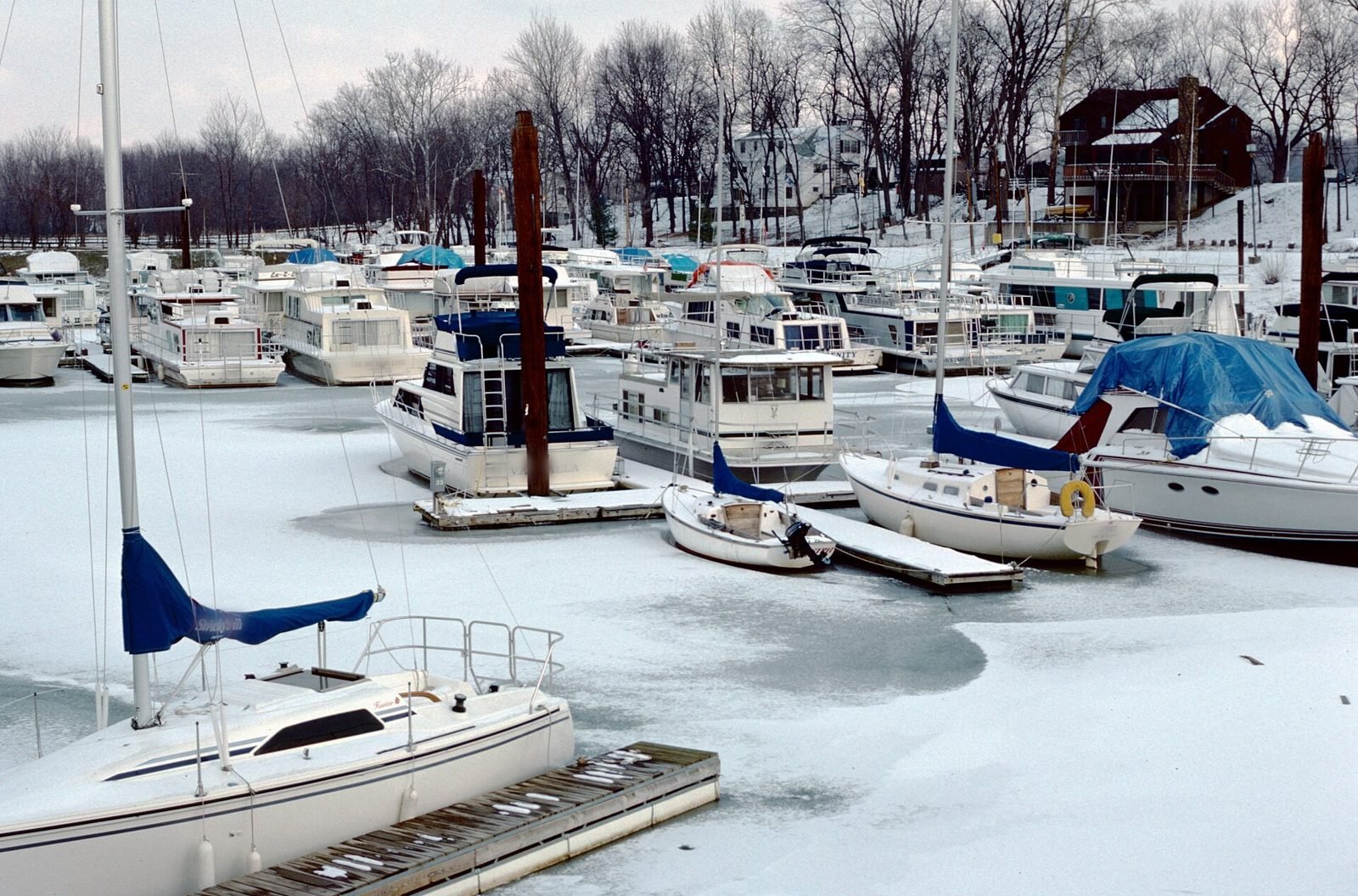
Do you need to winterize? The warm-climate question
BoatUS recommends winterizing your engine if the boat will be laid up for even a few weeks, unless you are in Hawaii or the Florida Keys. Its freeze claims come from all over the country. In the South, many involve boats that were never winterized, or engines kept warm by a heater until the power went out.
Because water holds heat longer than air, BoatUS notes a boat stored on land can freeze sooner than one in the water.
In Florida and other warm areas, a boat that won't see a freeze can usually skip the freeze steps, but not the storage care. One engine maker's guide says even boats stored in a warm climate should still get the long-term storage steps in the manual: stale fuel, old oil, and a dead battery don't care about the thermometer. And Florida isn't freeze-proof. The University of Florida says the Gainesville area averages about 16 days a year at or below 32°F. Check the forecast where your boat will sit.
Before you start: know your cooling system
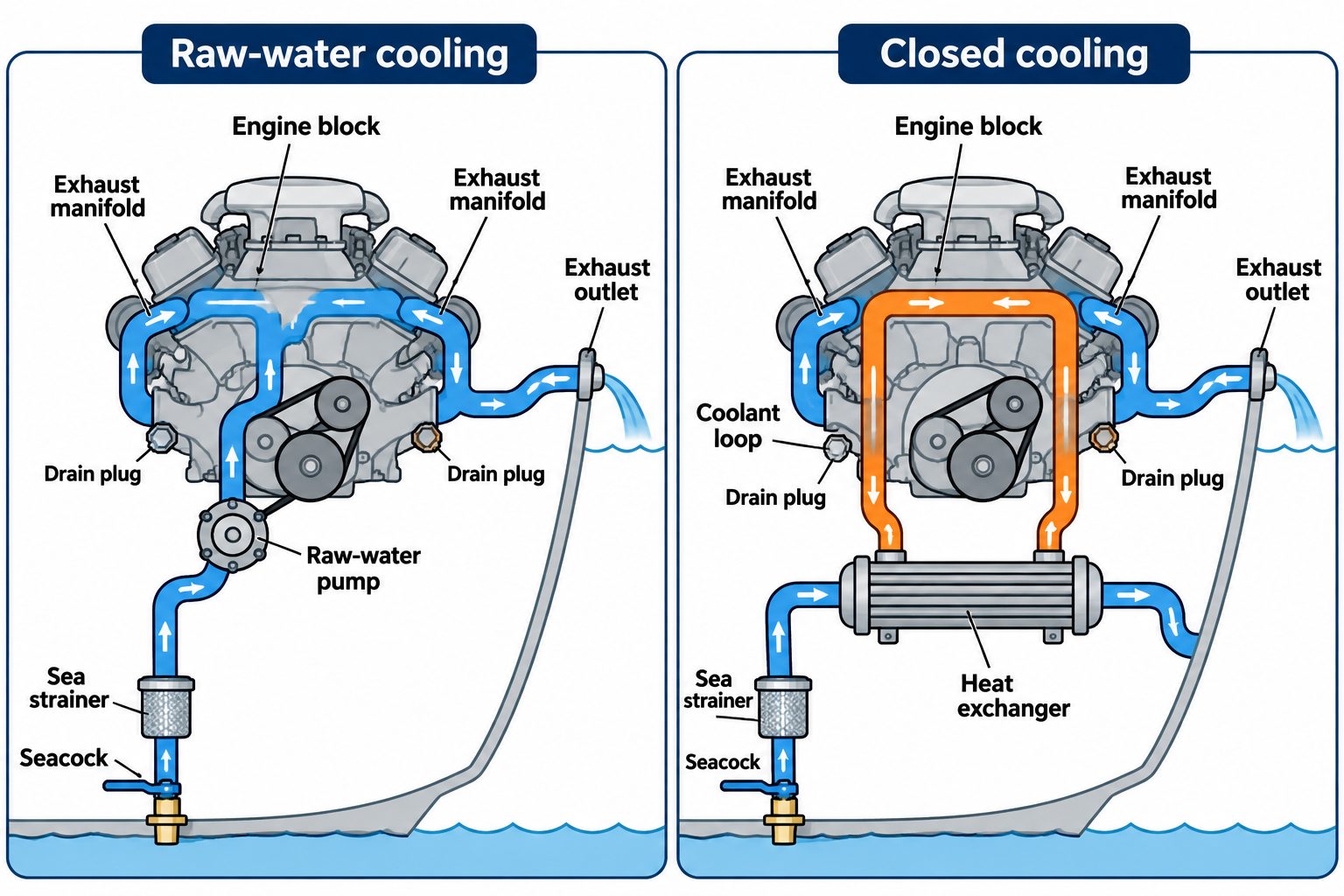
On a raw-water-cooled engine, outside water runs straight through the block, heads, and exhaust manifolds. On a freshwater-cooled (closed-cooling) engine, a sealed coolant loop cools the engine, and raw water cools that loop through a heat exchanger.
That difference matters:
- Closed-cooling side: check that the coolant mixture protects to your area's lowest temperature, as your manual specifies. BoatUS says this is typically a 50/50 mix, and warns against going richer: 100 percent coolant turns to gel at -8°F. One engine maker's manual warns never to put propylene glycol in the closed-cooling side.
- Raw-water side: this is the part that must be drained, or filled with marine winterizing antifreeze. That antifreeze is non-toxic propylene glycol, usually pink. Engine makers call for a propylene glycol antifreeze with a rust inhibitor, mixed as the antifreeze maker directs for the lowest temperature you expect.
1. Stabilize the fuel and change the fuel filter
One engine maker suggests running the tank nearly empty, then adding fresh fuel treated with a marine fuel stabilizer. On older boats with vented tanks, both BoatUS and that engine maker suggest filling to about 95 percent to cut down on condensation while leaving room for expansion. The same guide says many newer, non-vented tanks don't need to be filled.
Run the engine so treated fuel reaches the whole fuel system. Then replace the water-separating fuel filter; Discover Boating warns against dumping one out and reusing it. Some fuel-injected engines call for a special storage fuel mix, so check your manual.
2. Change the oil and filter
Used oil holds acids and moisture that can pit bearings over the winter. BoatUS recommends warming the engine a few minutes, changing the oil and filter, then running it about a minute to circulate fresh oil and check for leaks. Do it before storage even if you ran few hours.
3. Protect the cooling system from freezing
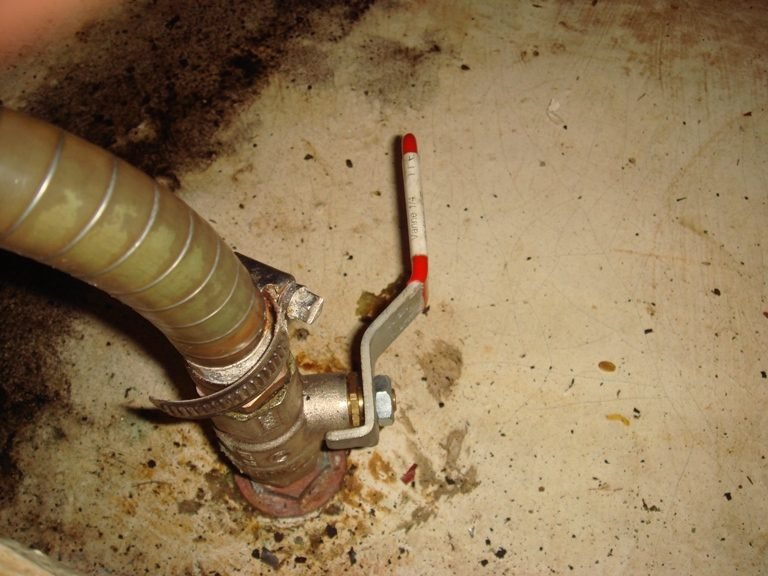
Safety first. If the boat is in the water, close the seacock (or disconnect and plug the intake hose) and make sure the bilge pump works before you open any drains. An open drain system can let water into the bilge. Never run the engine with the drains open.
You have two options for the raw-water side, and your manual will say which it prefers.
Drain it. Get the boat as level as possible and open every drain plug and petcock your manual lists. BoatUS says a petcock that won't drain may be clogged with rust; clear it with a wire. Also drain the sea strainer, seacock body, and water-lift muffler if you have one. Small pockets of trapped water can still crack parts.
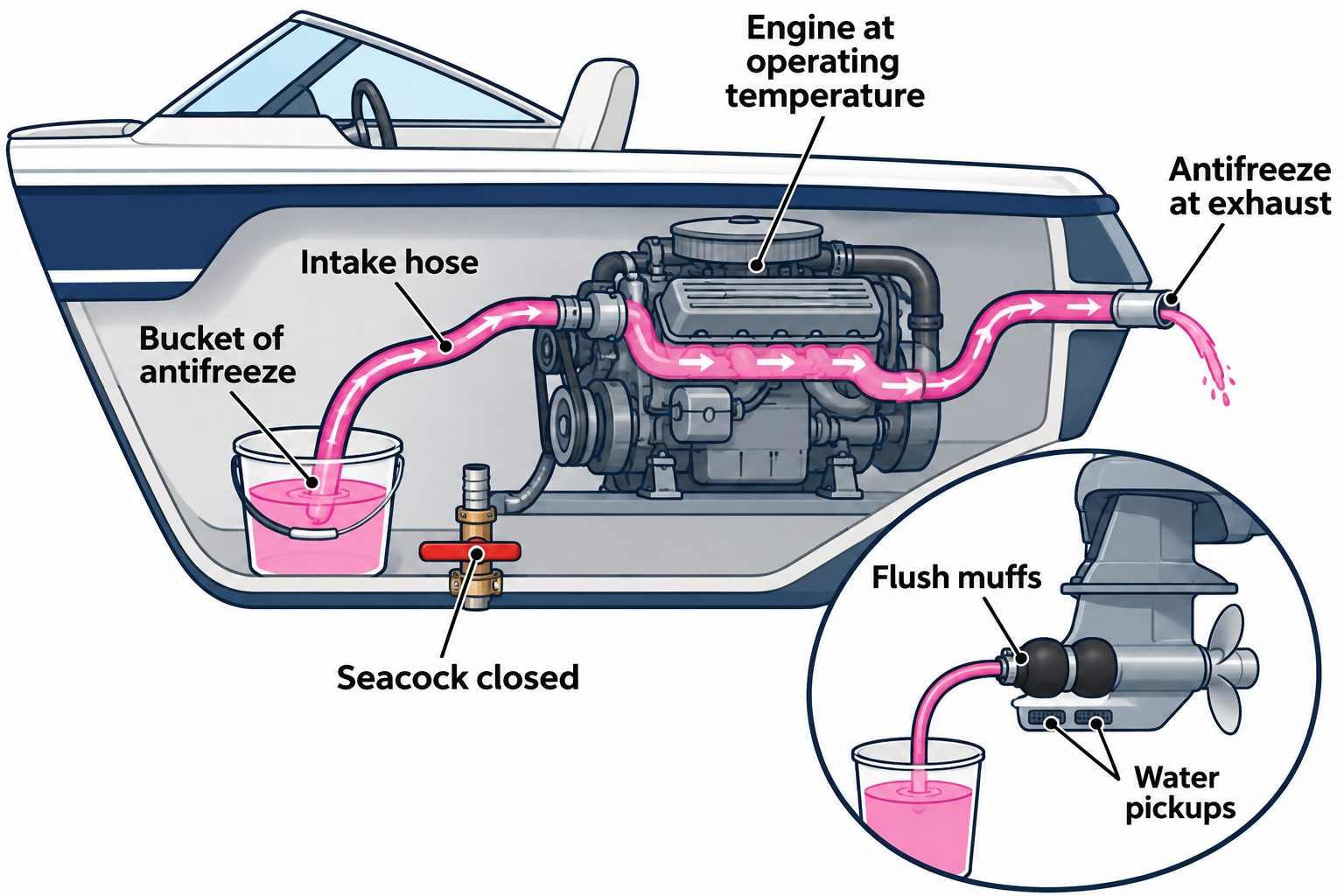
Or circulate antifreeze. BoatUS calls this the preferred method for inboards:
- Bring the engine to operating temperature so the thermostat is open. If it isn't, antifreeze won't reach every passage.
- With the seacock closed, put the raw-water intake hose in a five-gallon bucket of non-toxic antifreeze (BoatUS says at least two gallons).
- Run the engine at idle until antifreeze comes out the exhaust for 30 seconds or more.
Sterndrives: some take cooling water through a thru-hull, others through the drive. For those, feed antifreeze from the bucket to flush muffs on the drive's pickups. Follow the antifreeze label; BoatUS notes most are used full strength.
4. Fog the engine
Fogging oil coats the cylinders so moisture doesn't rust them over the winter. On many carbureted engines, BoatUS describes spraying it into the intake in the last seconds of running until the engine stalls. Fuel-injected engines often use a different method, so follow your manual.
BoatUS suggests then taping over the flame arrester and leaving a reminder tag at the helm, so nobody starts it in spring with the tape on.
5. Service the sterndrive
- Change the gear lube and look at what drains out. An engine maker's guide says water or milky, cloudy lube means the drive should be inspected by a pro. BoatUS says new lube goes in from the bottom drain hole until it shows at the top vent, never from the top.
- Inspect the bellows, hoses, and clamps for cracks and wear (Discover Boating).
- Pull the prop. Grease the shaft splines and check for fishing line.
- Store the drive full down. BoatUS and engine makers both say this lets water drain, so rain and snow can't collect and freeze in it.
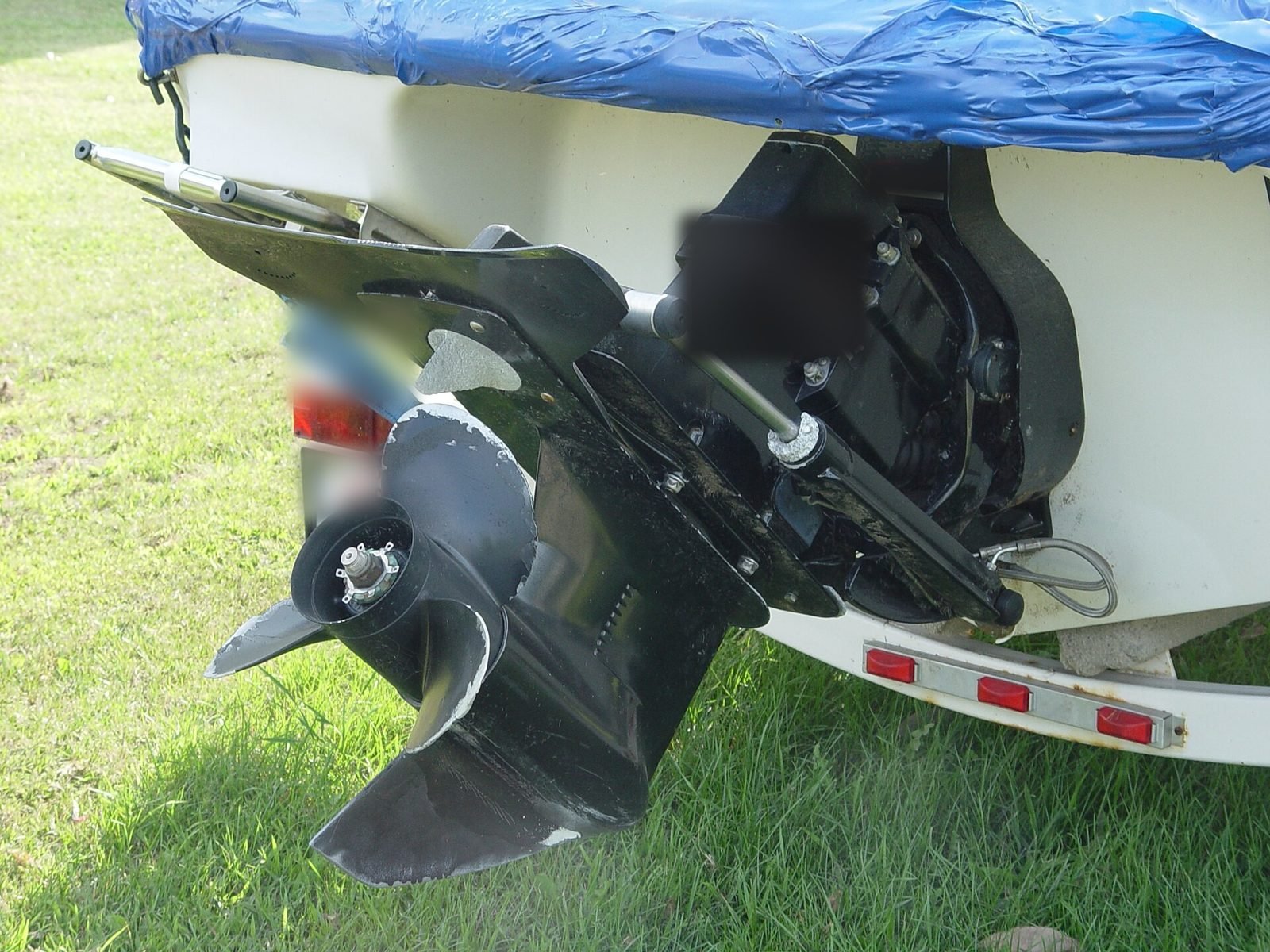
6. Battery, bilge, and the last details
- Battery: clean the terminals, switch it off or disconnect it, and keep it charged with a marine smart charger. Engine makers note that a discharged battery is more likely to freeze.
- Bilge: pump it dry and clean up oil and antifreeze. Ohio DNR asks boaters to recycle used oil, not toss it in the trash or a storm drain.
- Paperwork: if a yard is doing the work, BoatUS recommends a written contract listing every job, with a deadline before the first hard freeze.
Then cover the boat. See our guide to shrink wrap vs. a boat cover. Have an outboard too? See how to winterize your outboard motor.
Diesel inboard? Follow your engine manual's lay-up steps, or find a diesel engine pro.
Printable inboard and sterndrive winterizing checklist
Print this page and check items off as you go. Skip anything your manual says does not apply.
- Check with your boat, engine, or trailer manufacturer, and read your engine manual's storage section
- Decide: full winterization, or warm-climate lay-up (check the lowest forecast where the boat will sit)
- Stabilize fresh fuel (vented tanks about 95 percent full) and run it through the system
- Replace the water-separating fuel filter
- Warm the engine, then change the oil and filter
- Check closed-cooling coolant strength (never propylene glycol on that side)
- Boat level; seacock closed or intake plugged; bilge pump working
- Drain every block and manifold drain, sea strainer, seacock body, and water-lift muffler, or
- Circulate propylene glycol antifreeze at operating temperature until it exits the exhaust for 30+ seconds
- Fog the engine; seal the intake and exhaust openings and tag the helm
- Change sterndrive gear lube; have milky or watery lube checked by a pro
- Inspect bellows, hoses, and clamps; grease the prop shaft splines
- Store the sterndrive full down
- Keep the battery charged; switch it off or disconnect it
- Clean the bilge; recycle used oil and antifreeze
This guide is general information. Always check with your boat, engine, or trailer manufacturer, and follow your engine manual's storage procedure. It is not a substitute for their instructions. Drain points, antifreeze type and mix, and fogging methods vary by engine. If you are not sure, have a qualified marine technician winterize your engine. The Boating Advisor does not endorse specific product brands.
Sources
Next step
Related guides
Get boating tips and launch news
One short email when there's something useful. Unsubscribe anytime.
We'll only use your email for these updates. We never sell it.